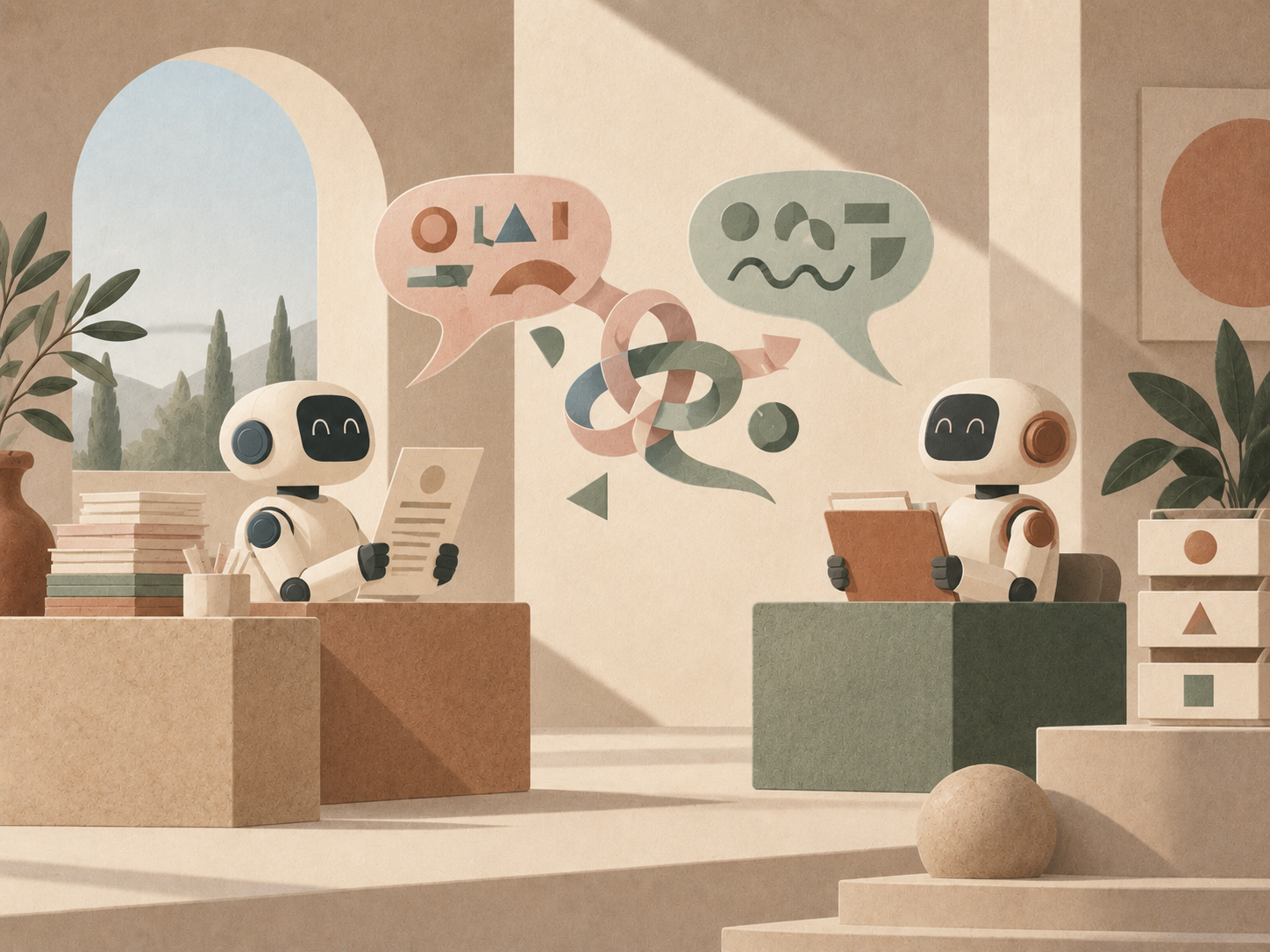
Job applications might be the strangest place AI has taken over. Candidates use it to rewrite resumes and mirror the wording in job descriptions, then have it write the cover letter too. Employers then use screening software and AI to work through the growing pile of increasingly polished applications and decide who's worth speaking to. We've built a system where one machine helps a person convince another machine that the person is a person.
Nobody involved is being irrational, either. Candidates need to get through automated screening, so they're rewarded for using the right keywords and describing their experience in a language that the system recognises. Employers get more applications than they can reasonably assess by hand, so they add stronger filters. Candidates then optimise harder for those filters, which makes applications more alike and gives employers even less useful information to work with.
The cover letter might be the clearest example. Companies still ask why someone wants the role, even though everyone knows an AI can write a competent answer in seconds. So the letter’s real job is to not sound like AI wrote it, and the advice for pulling that off is getting a bit ridiculous: add a personal observation, make it less polished, remove the em dash, introduce the occasional awkward phrase so a human definitely appears to live there. We're now deliberately adding imperfections to machine-generated writing to prove it wasn't machine-generated. Fantastic system. No notes.
I do like applications that ask one or two questions in a text box, even when they're fairly standard ones like why you want the job or why you want to work for that particular company. They at least make the candidate engage with the role instead of uploading the same documents and moving on, and a vague or generic answer is easier to spot when it sits underneath a specific question. It probably filters out some of the lowest-effort applications, but it isn't foolproof. AI can answer those questions too, often quite convincingly, especially when the job ad and company website already contain everything needed to manufacture a respectable response. The better questions ask for an opinion or a reaction to something real, because they show how someone thinks rather than how well they can assemble a professional-sounding paragraph.
What employers actually need to know is still fairly simple. Can this person solve the problems we have? Have they done anything similar before? Can they explain their thinking without turning it into corporate soup? Would I want to work with them? You'd probably learn more by showing someone a real problem and asking what they notice than by making them write another paragraph about how excited they are to join a collaborative, fast-paced environment.